
Isaac G
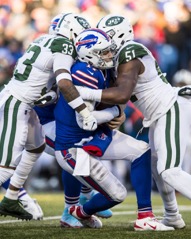
With 4:56 left in the third quarter of a divisional showdown, Buffalo Bills star rookie, Josh Allen, is sacked for an eight yard loss. The sack is credited to New York Jets linebacker Brandon Copeland.
Two days after a close win over the Bills, Brandon Copeland posts a series of before and after photos of his most recent real estate investment, or “house flip” to his Instagram account.
If this post came from a name other than Brandon Copeland, it might be a surprise, but Brandon Copeland is not your typical athlete; Copeland is much more than an athlete. Copeland plays in the NFL, but he also teaches at the University of Pennsylvania, flips houses, runs a non-profit organization, and has spent time on Wall Street.
What makes Copeland even more special his level of involvement in everything he does. With such a large variety of interests and occupations, it would be easy for Copeland to become detached from the day-to-day tasks involved in running his empire, yet Copeland does not let this happen. In all of his occupations, Copeland is actively involved, and he will tell you that this has helped him both on the field, and off of it.
Copeland describes football as his “primary,” and his work of the field as his “side hustles.”
“Being vocal about the side hustles means that I have to step my game up on the field. So it makes my primary sharper. If I miss a play now […] coaches gonna say he probably distracted thinking about a real estate flip.” Copeland says “I have to be so sharp with my playbook, I have to be so sharp on the field so that you could never, never mistake what I’m doing off the field as a distraction to me on the field”
Copeland’s primary also benefits his secondary. Copeland says that “having a primary allows me to make clearer decisions in the side hustles, because I don’t have to […] take chances and take as many risks.
Copeland is saying that football allows him to not become desperate with investments. Football gives Copeland a steady income that allows him to avoid making the “desperation investments,” that many investors fall prey to.
A piece of advice that Copeland gives is a warning on how “people make bad decisions when they are desperate.” Copeland is saying that the risk brought on by need can be dangerous.
Copeland does not need his investments to eat. Playing football guarantees that he will not go hungry today, but his side hustles are what assure him he will not go hungry whenever he decides to hang up his cleats.
When he does hang up his cleats, Copeland wants to have an empire built. What Copeland is doing now is just the start of this ever-widening empire. Just this year, he made a major addition to his resume: teaching.
For students attending the University of Pennsylvania, there is an opportunity to attend a class taught by Dr. Brian Peterson and Wharton alumni, Brandon Copeland. The class focuses on helping students become better prepared for life after college with topics ranging from what goes into a credit score to active investing versus retirement investing. These life skills are paired with teaching on the wealth gap and the systemic race-based portion of the wealth gap that the United States has been experiencing for years.
At the current moment in time, NFL free agency has just kicked off. Brandon Copeland is one of many players who will be signing a new contract. Brandon Copeland will be the only NFL player this year to sign a contract while teaching at the University of Pennsylvania.


 vantagedigitaljournalism.com